Arthur Miller’s Death of a Salesman: A Celebration
By Joyce Carol Oates Originally published in Michigan Quarterly Review, Fall 1998, and reprinted in Where I’ve Been, And Where I’m Going “He’s a man way out there in the blue, riding on […]
A Joyce Carol Oates Patchwork
By Joyce Carol Oates Originally published in Michigan Quarterly Review, Fall 1998, and reprinted in Where I’ve Been, And Where I’m Going “He’s a man way out there in the blue, riding on […]
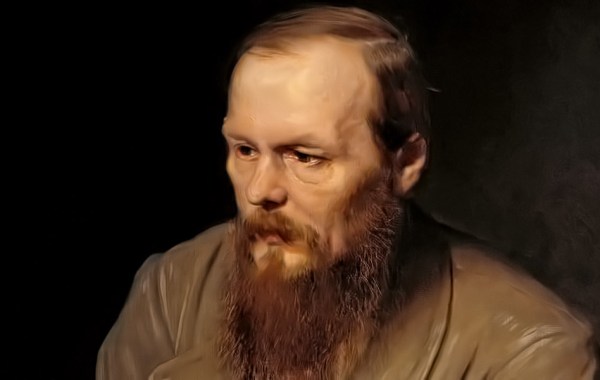
That so prodigiously long and so luridly convoluted a novel as The Possessed evolves, nevertheless, with the structural coherence of a tragedy of Aeschylus or Euripides is a testament of Dostoyevsky’s unparalleled genius. It has always been known that he is a marvelous creator of character—he is the equal of Dickens, and perhaps even the equal of Shakespeare, in this regard. But that he is a genius as a craftsman is perhaps less well known.
One is driven, then, again and again to a reassessment of this novel: is it an affirmative work, a kind of divine comedy that successfully answers the questions it asks? Or does it mock its very intentions, containing within it an antinovel, a tragic vision of life that bitterly opposes the joy of the ending?
By Joyce Carol Oates Originally published in The Georgia Review, Fall 1978; Reprinted in Contraries. Somehow it has happened—no one knows quite how, or why—that the incidence of violence and robbery has […]
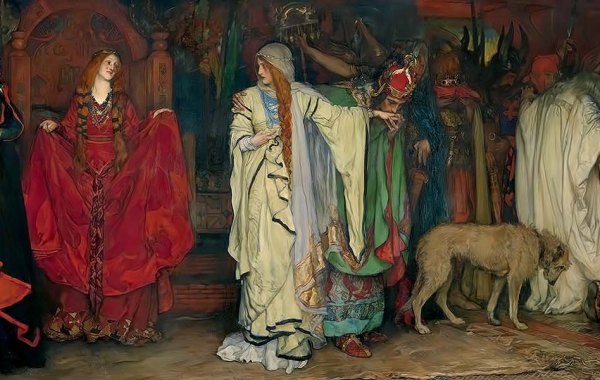
Cordelia, with her unearned kiss, symbolizes that moment of grace that forces the tragic action to a temporary halt, and allows a magical synthesis of the bliss of eternity and the tragedy of time that is so powerful in Shakespeare, because it is so rare.
It is moving, yes, but bitterly moving, and our emotions will be turned against us shortly, for the visionary experience of a timeless love cannot compete in Shakespeare with the tragic vision, the grim necessity of history.
Shakespeare’s Antony and Cleopatra shares with Troilus and Cressida the obsessive and self-consuming rage of the tragic figure as he confronts and attempts to define “reality.” But, more extravagantly than Troilus and Cressida, this reality is layered with masquerade; forms that are often as lyric as brutal shift and change and baffle expectation. The constant refinement of brute reality into lyric illusion is the work not simply of Antony, Shakespeare’s hero, but the lifelong work of Shakespeare himself.
Troilus and Cressida, that most vexing and ambiguous of Shakespeare’s plays, strikes the modern reader as a contemporary document—its investigation of numerous infidelities, its criticism of tragic pretensions, above all, its implicit debate between what is essential in human life and what is only existential are themes of the twentieth century.
Jane Eyre: An Introduction One of the reasons for Jane Eyre’s authority over her own experience, and the confidence with which she assesses that experience, is that, as the romantically […]
By Joyce Carol Oates Originally published in Critical Inquiry, Winter 1983. Reprinted in The Profane Art Once upon a time, it seems, an English clergyman born Brunty or Branty, self-baptized the more […]
By Joyce Carol Oates Originally published on Salon.com, September 29, 1997 Jane Eyre abounds in mysteries and surprises. The most immediate, for Charlotte Brontë’s contemporaries, was the identity of the author of […]
By Joyce Carol Oates Originally published as a preface to Jane Eyre (Bantam Classic, 1988); it appeared in an earlier version under the title “Romance and Anti-Romance: From Brontë’s Jane Eyre to Rhys’s Wide Sargasso […]
Though I was writing and publishing before I came to live in Detroit in 1962, it was only in this city that I conceived of a personal body of literature in which the unique and the emblematic might be conjoined; and the private, the domestic, the idiosyncratic yoked to larger social and political concerns (in such Detroit-set novels as them and Do With Me What You Will, and such historically focused novels as Angel of Light, Wonderland, and You Must Remember This).
By Joyce Carol Oates Originally Published in American Gothic Tales Though in many of its aspects this visible world seems formed in love, the invisible spheres were formed in fright. […]
By Joyce Carol Oates Originally published as an Afterword to Haunted: Tales of the Grotesque What is the “grotesque”—and what is “horror”—in art? And why do these seemingly repellent states of […]
I first read this unclassifiable prose piece— hardly a “tale” in any conventional sense, still less a “story”—when I was an undergraduate at Syracuse University, and I have been haunted by its images ever since. Herman Melville, our first native feminist?—can it be so?