
Blood, Neon, and Failure in the Desert
Confronted with an opponent like “Bonecrusher” Smith, who violates the decorum of the ring by not fighting, Tyson is at a loss; he hits his man after the bell, in an adolescent display of frustration.
A Joyce Carol Oates Patchwork


Confronted with an opponent like “Bonecrusher” Smith, who violates the decorum of the ring by not fighting, Tyson is at a loss; he hits his man after the bell, in an adolescent display of frustration.

It is illuminating to read Lawrence’s entire poetic work as a kind of journal … This massive work is more powerful, more emotionally combative, than even the greatest of his novels.
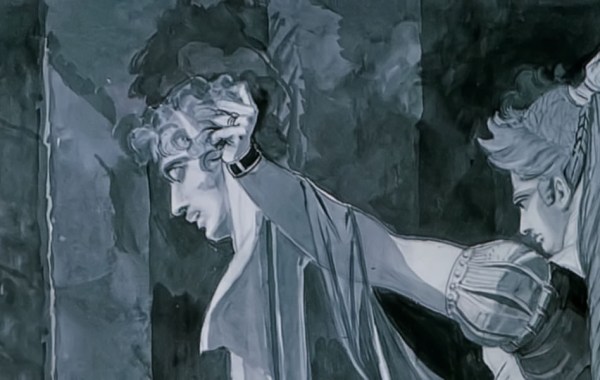
Women in Love is an inadequate title. The novel concerns itself with far more than simply women in love. Gerald and Birkin and Ursula and Gudrun are immense figures, monstrous creations out of legend, out of mythology; they are unable to alter their fates, like tragic heroes and heroines of old.

The notorious case of the murder of six-year-old child beauty-pageant winner JonBenét Ramsey in Boulder, Colorado, a case that Sherlock Holmes would have “solved” in a few seconds’ ratiocination (“No footprints in the snow around the house? No forced entry? A staged kidnapping, ransom note seemingly written by the mother?”)

Meeting her at last I felt almost faint—certainly unreal—turning transparent myself in the presence of this totally defined, self-confident, gracious woman.

The poems in this final volume of Sylvia Plath’s work were all written during the last year of her life, and are therefore products of the same anguished, meticulous imagination that created the famous Ariel

Read together, these two excellent books cause us to ask ourselves one of the riddles of life: Why is the experience of one human being so vastly different from that of another? Why, in two sensitive, intelligent, gifted women poets should the energies of art be so differently employed? Where one discovers in nature a “presence” of “something else that went before” (Kumin in “The Presence”), the other discovers a helpless “blue dissolve” and shadows “chanting, but easing nothing” (Plath in “Winter Trees”).

This immensely gifted and ambitious poet, thirty years old, in a paroxysm of domestic unhappiness, emotional crisis, and physical breakdown, gassed herself in the depths of a bitter winter in London 1963, shortly after having written a number of extraordinarily powerful poems—the very poems, white-hot, venomous, self-lacerating, that would make her posthumous fame.

“I am made, crudely, for success,” Plath stated matter-of-factly in her journal in April 1958. Yet Plath could not have foreseen that her success would be almost entirely posthumous, and ironic: for, by killing herself impulsively and dying intestate, she delivered her precious fund of work, as well as her two young children Frieda and Nicholas, into the hands of her estranged husband …

The cult of Plath insists she is a saintly martyr, but of course she is something less dramatic than this, but more valuable. The “I” of the poems is an artful construction, a tragic figure whose tragedy is classical, the result of a limited vision that believed itself the mirror held up to nature …
The paradox with which the feminist critic or sympathizer must contend is this: that revolutionary advances in literature often fail to transcend deeply conservative and stereotypical images of women, as if, in a sense, the nineteenth century were eerily superimposed upon even the most defiantly inventive literary “visions” of the twentieth century.

Ulysses is certainly the greatest novel in the English language, and one might argue for its being the greatest single work of art in our tradition. How significant, then, and how teasing, that this masterwork should be a comedy and that its creator should have explicitly valued the comic “vision” over the tragic …
By Joyce Carol Oates Originally published in the New York Times Book Review, July 11, 1982. Telling stories, I discovered at the age of 3 or 4, is a way of […]

It is a very self-conscious thing to speak of one’s “credo.” I think that most writers and artists love their work, which of course we don’t consider “work”—exactly. As artists love […]

By Joyce Carol Oates Originally published in Michigan Quarterly Review, Fall 1998, and reprinted in Where I’ve Been, And Where I’m Going “He’s a man way out there in the blue, riding on […]
One is driven, then, again and again to a reassessment of this novel: is it an affirmative work, a kind of divine comedy that successfully answers the questions it asks? Or does it mock its very intentions, containing within it an antinovel, a tragic vision of life that bitterly opposes the joy of the ending?
 Celestial Timepiece